
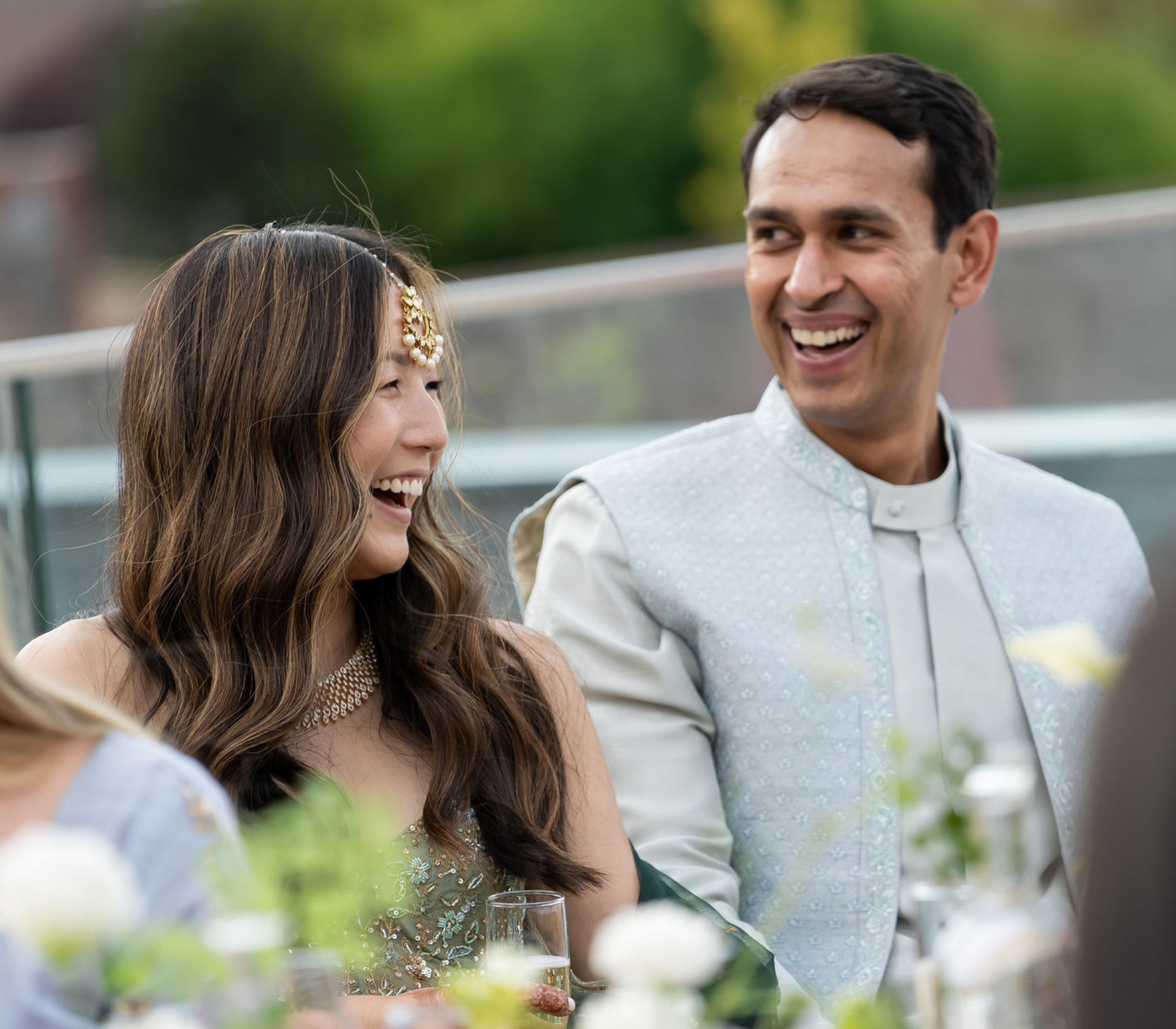
All photo credits for article: Cameron Clark Photography
On a gorgeous Friday last September, this couple kicked off their Park City destination wedding weekend with an unforgettable sangeet and welcome dinner in the Kimball Terrace.
We’ve talked before on this blog about the Indian wedding tradition called a sangeet and why we love hosting them every chance we get. There’s something about a sangeet that’s impossible to explain unless you’ve experienced one: the warmth and joy, the dancing and laughter and shared stories, the sheer exuberance.
But this sangeet and welcome dinner was particularly special.
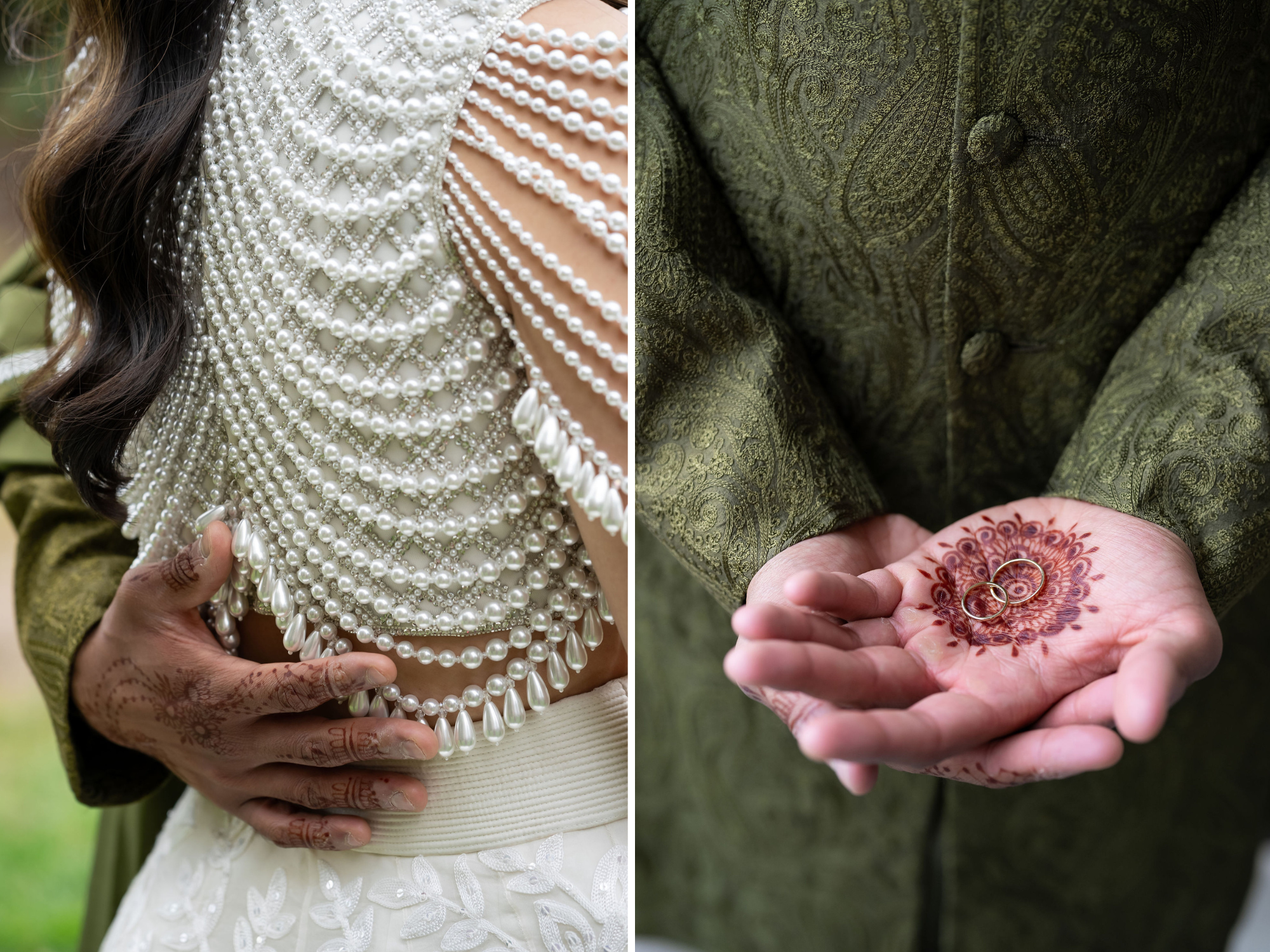
Sangeet and Welcome Dinner in Park City
This wedding not only brought together two beautiful human beings and two families; it also melded two distinct cultures. Elements of the evening—from the custom upscale menu to the colorful guests’ attire—highlighted both the bride’s Chinese heritage and the groom’s Indian traditions.
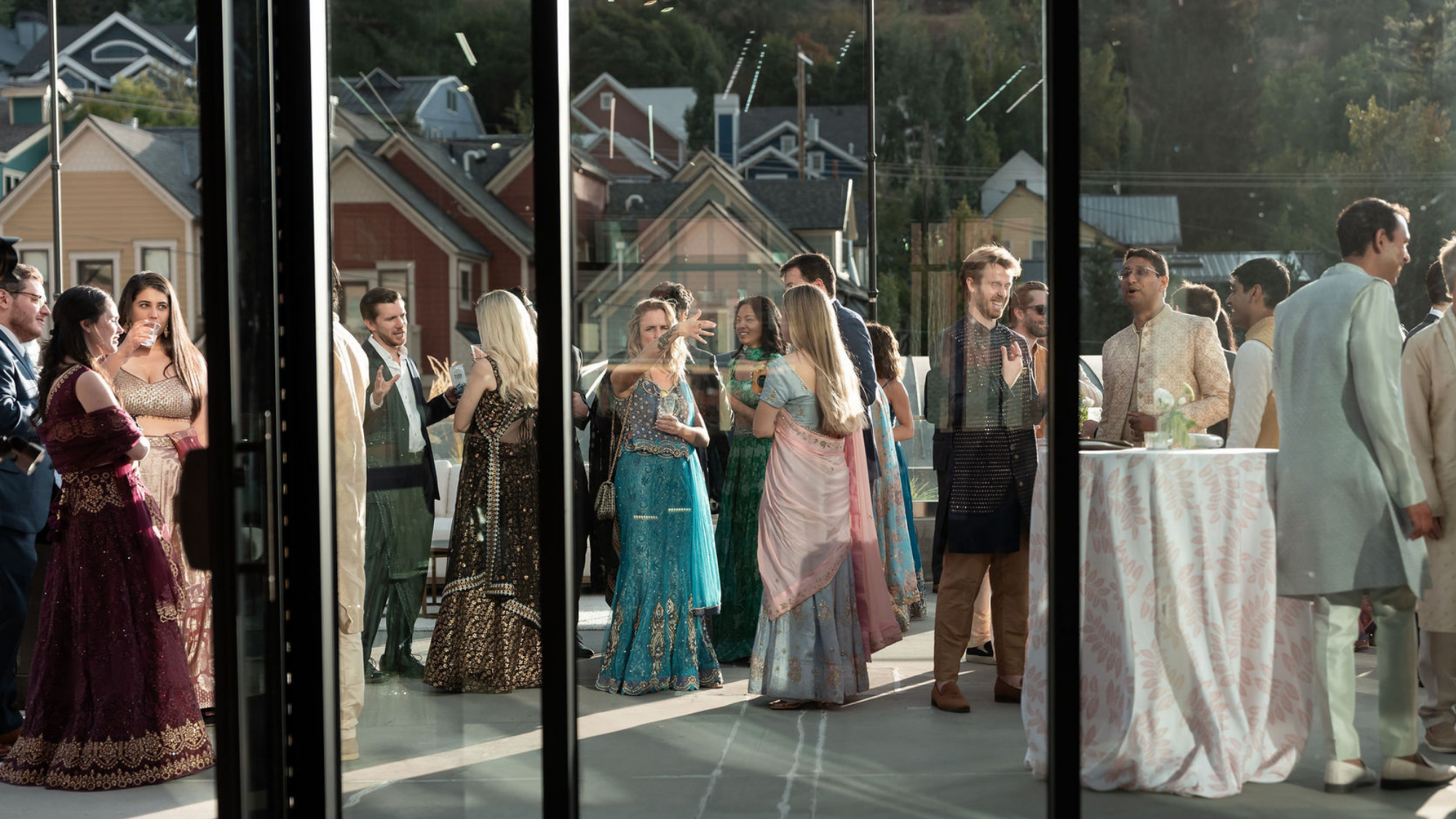
Henna
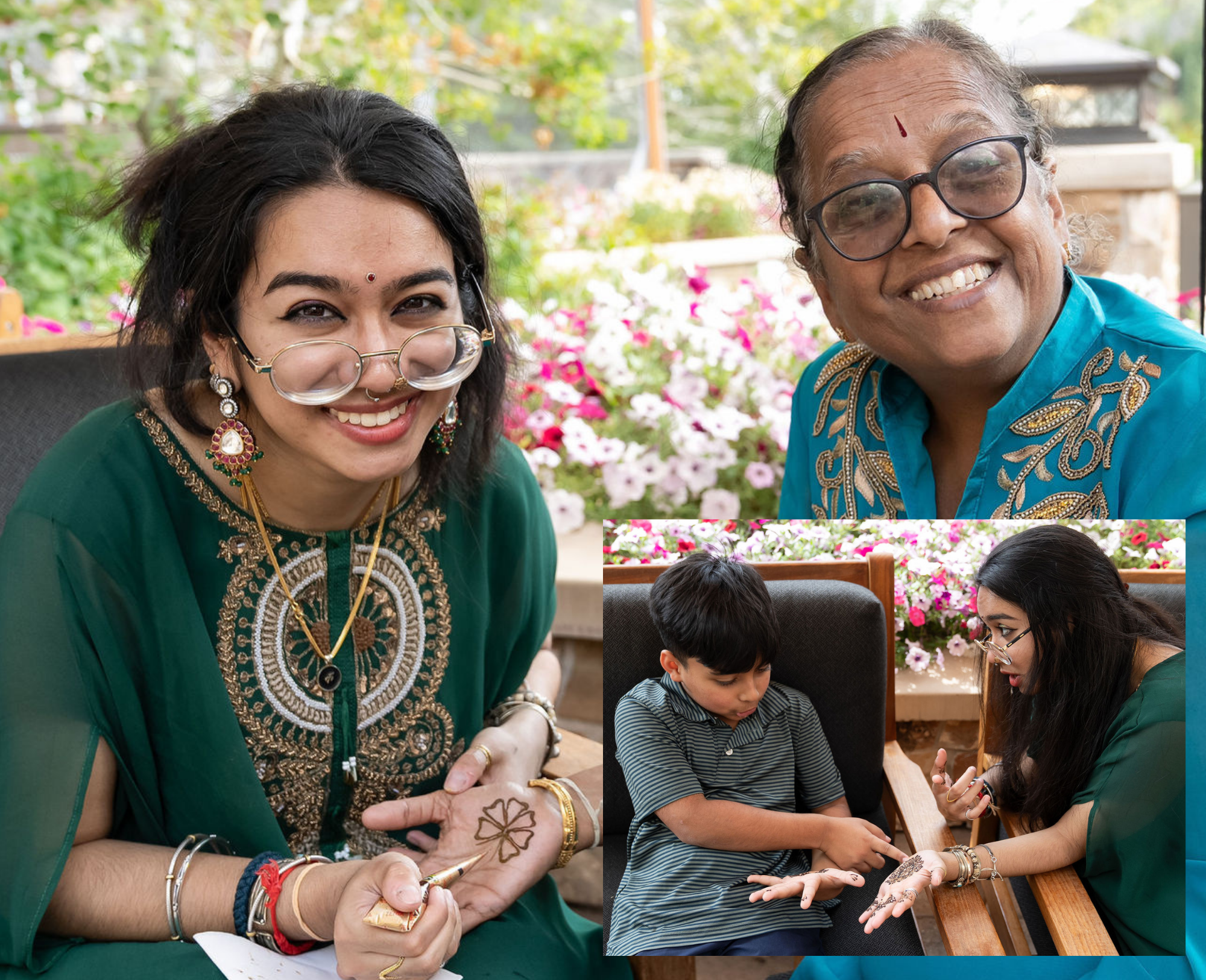
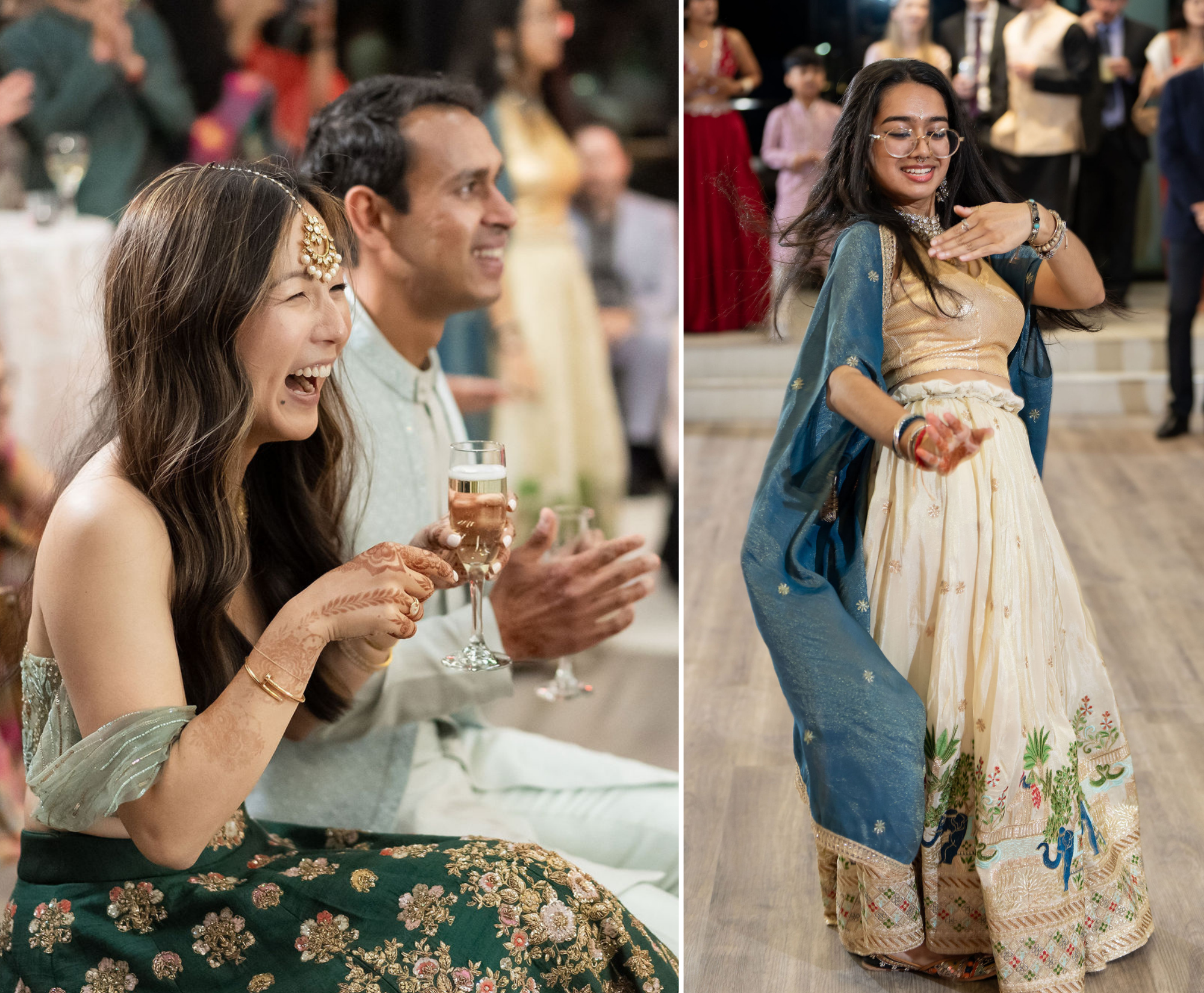
Henna, a plant-based brown dye used for temporary body art, plays several roles in Indian wedding traditions. It brings together beauty, ritual, storytelling, and celebration in one touching tradition.
Done well, henna is visually stunning, becoming part of the bride’s adornment alongside jewelry and ornate fabrics. At many traditional Indian weddings, friends and family gather to watch as intricate designs are painted onto the bride’s hands and feet, often accompanied by music, teasing, dancing, and laughter. The designs themselves can symbolize love, luck, protection, fertility, and prosperity, and they sometimes even hide the groom’s initials as part of a playful wedding-game tradition.
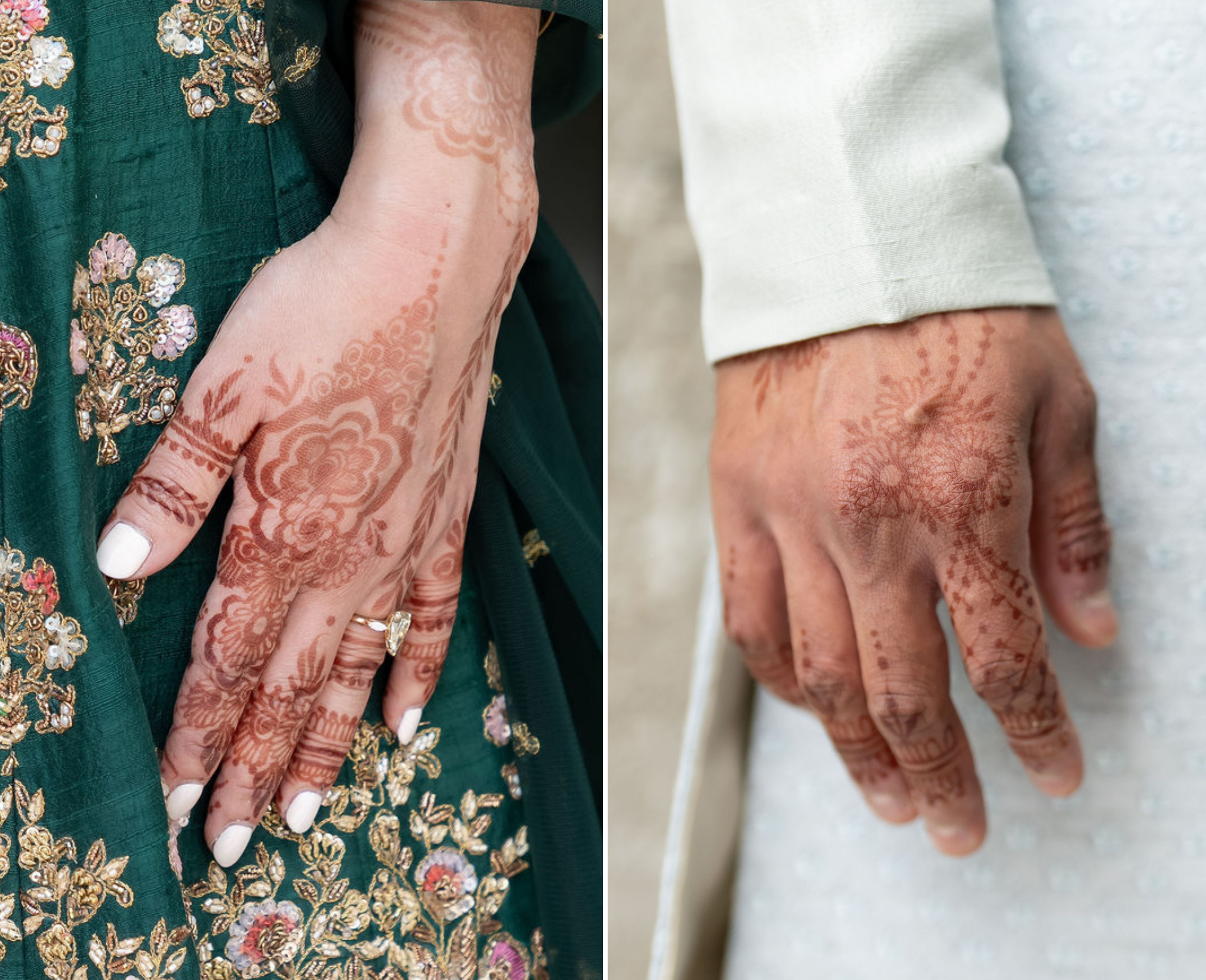
Applying henna is a personal, intimate service that takes time and careful attention. It naturally creates space for conversation, bonding across generations, and a kind of communal pause before the intensity of the main ceremony. Kids love it. Adults love it. The care and attention given by the henna artists at this event were deeply moving.
Speeches
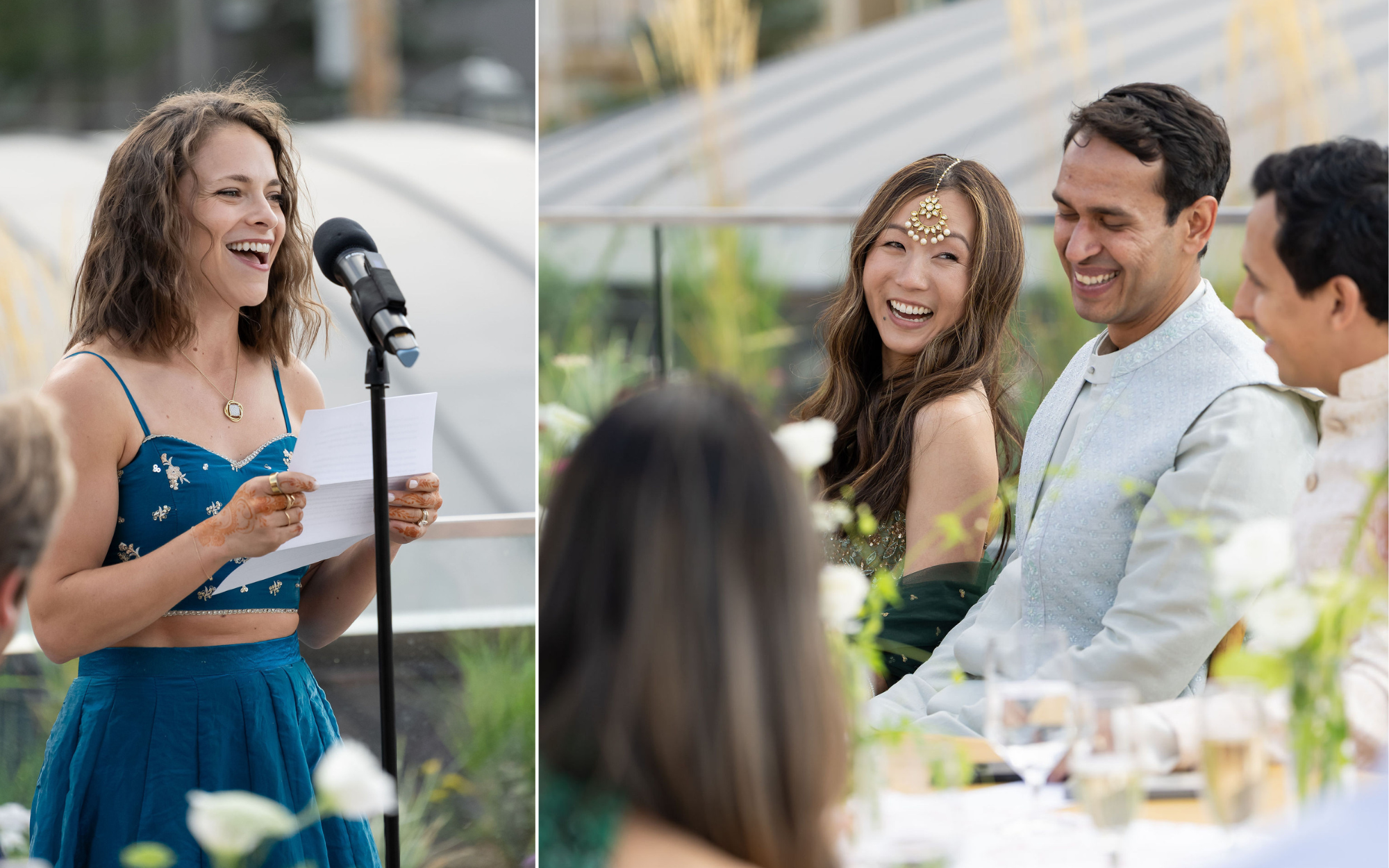
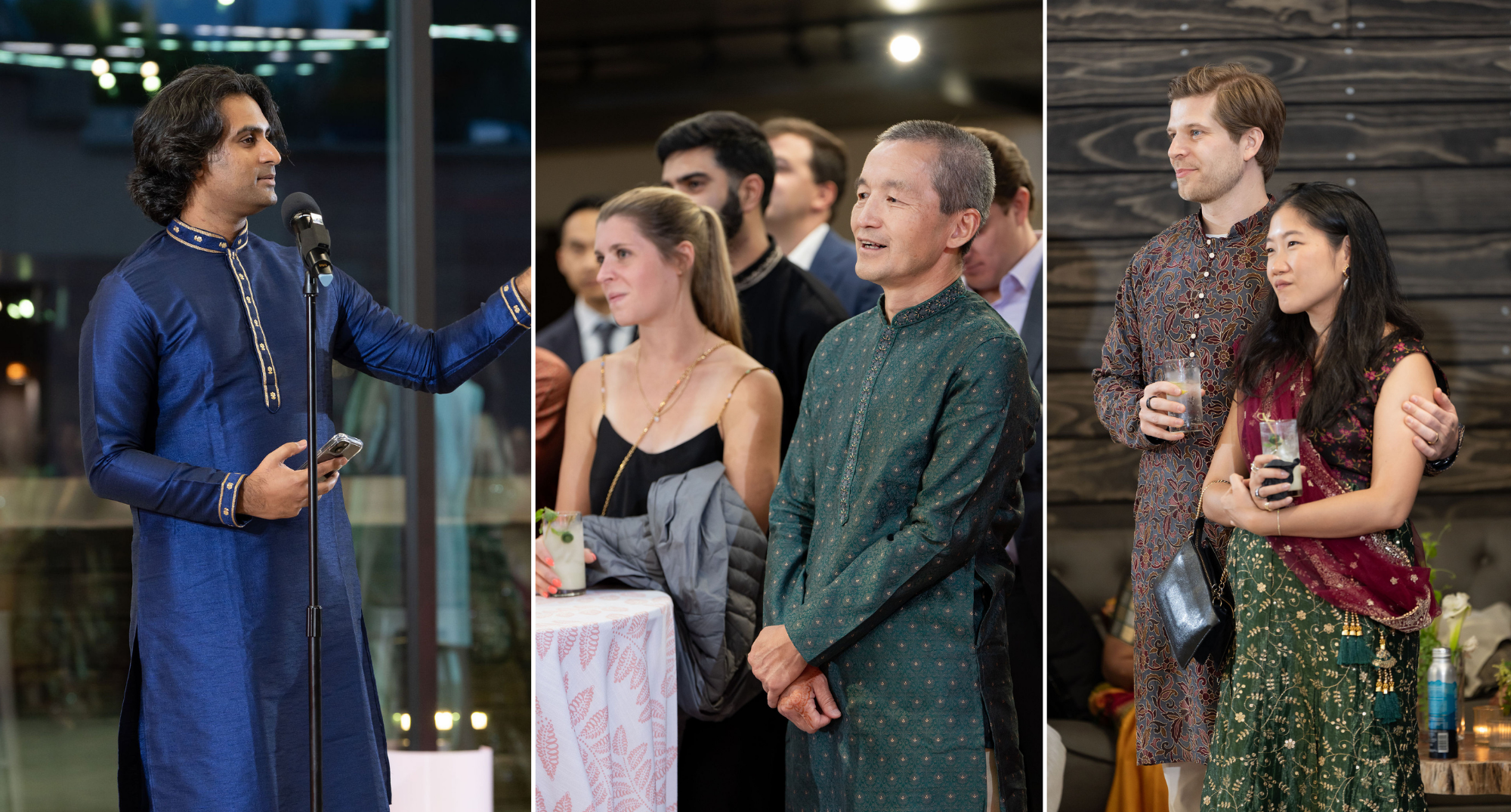
You can’t have a respectable sangeet without speeches!
During the welcome dinner and later, in the midst of the sangeet celebration, family members and close friends shared heartfelt, hilarious speeches to honor (and sometimes rib) the newlyweds.
Clothing
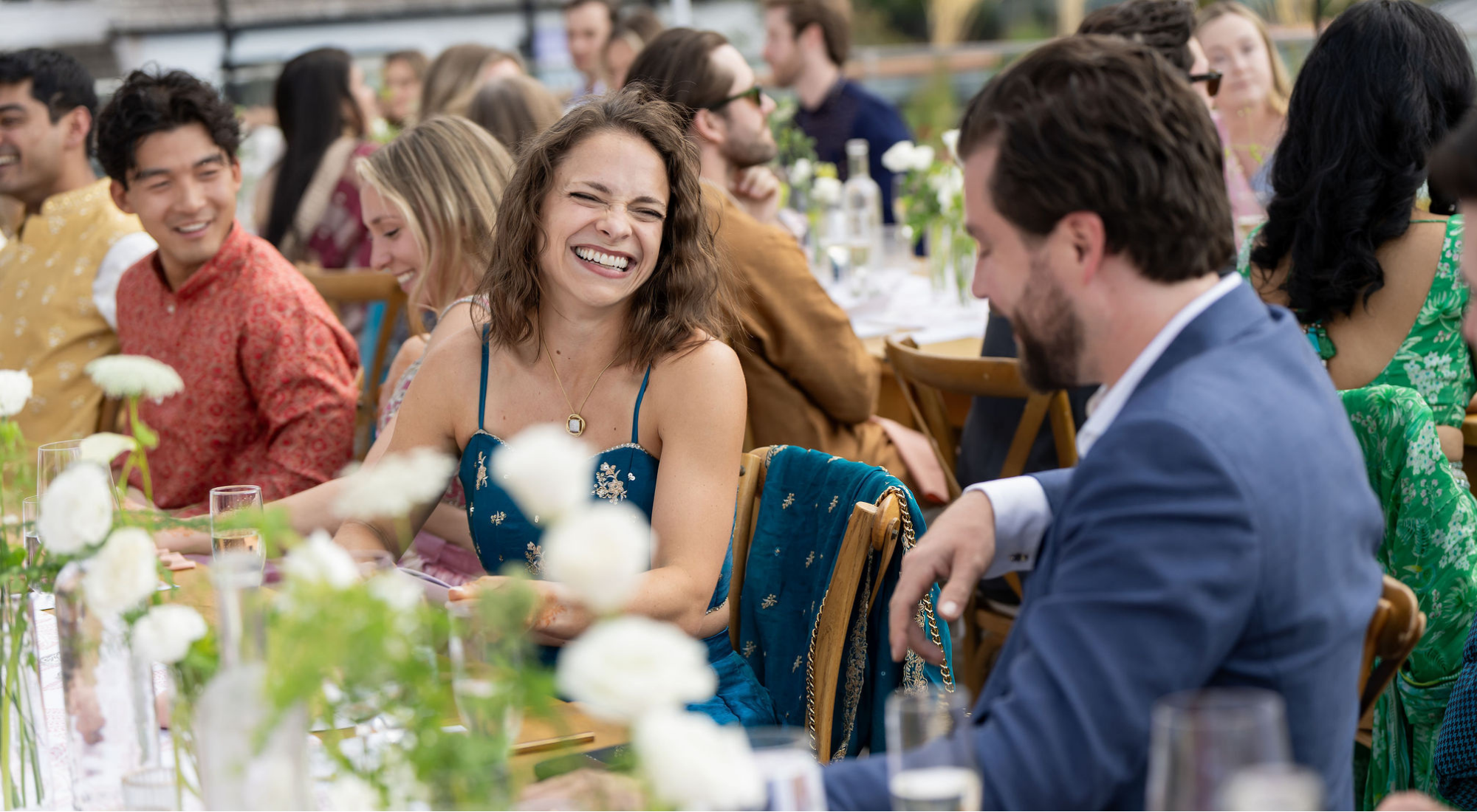
People dress up for all kinds of weddings, of course, but at a sangeet, people dress up!
The clothing worn at a sangeet is often one of the most dazzling parts of the celebration. Guests usually wear richly colored, highly expressive outfits that are festive enough for dancing but still deeply tied to tradition. Men often wear kurtas, bandhgalas, or sherwanis in jewel tones and luxurious fabrics. Women may wear lehengas, saris, shararas, or anarkalis covered in embroidery, mirrorwork, sequins, or beadwork.
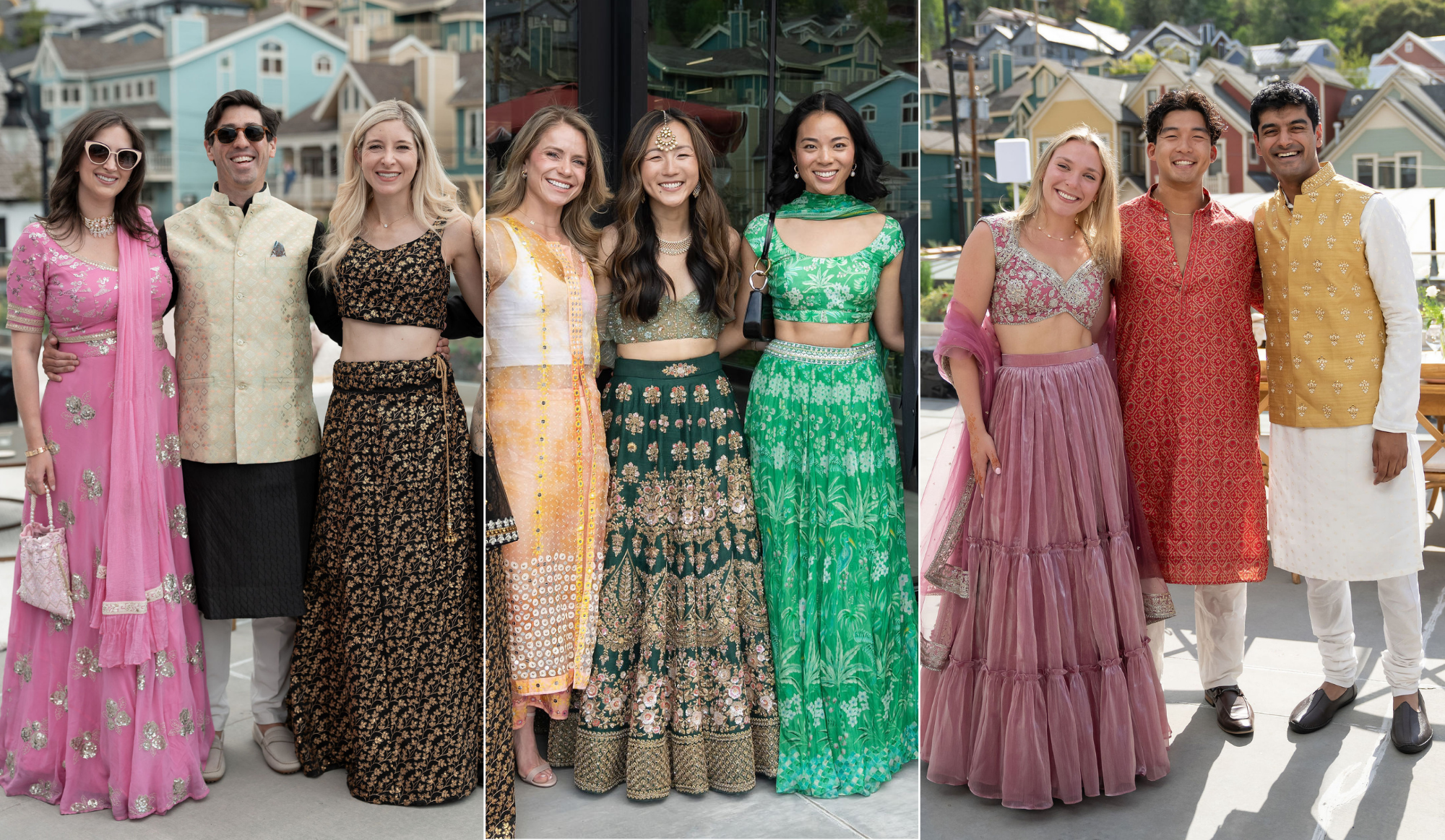
What’s remarkable about sangeet clothing is that it blends celebration, artistry, and movement. Unlike more solemn wedding ceremonies, a sangeet invites playfulness and performance, so the clothes are designed to shimmer under lights, swirl during dances, and reflect personality and family heritage. You’ll often see a mix of regional traditions, modern fashion, and cross-cultural influences all in one room.
The colors themselves carry energy and meaning:
· gold for prosperity, grandeur, and divine blessing
· red for love, marriage, and passion—a classic Indian bridal color
· green for renewal, harmony, growth, and fertility
· pink for romance, sweetness, and joy
· blue for elegance, calm, devotion, and depth
· yellow or mustard for happiness, sunlight, and auspicious beginnings
· orange or saffron for warmth, sacredness, and spiritual energy
· purple for royalty, luxury and dignity
· black for modern fashion and classiness (although traditionally avoided as a symbol of bad luck)
· white for purity and sophistication (although traditionally seen as a symbol of death, so it’s often softened with embroidery or paired with other accents)
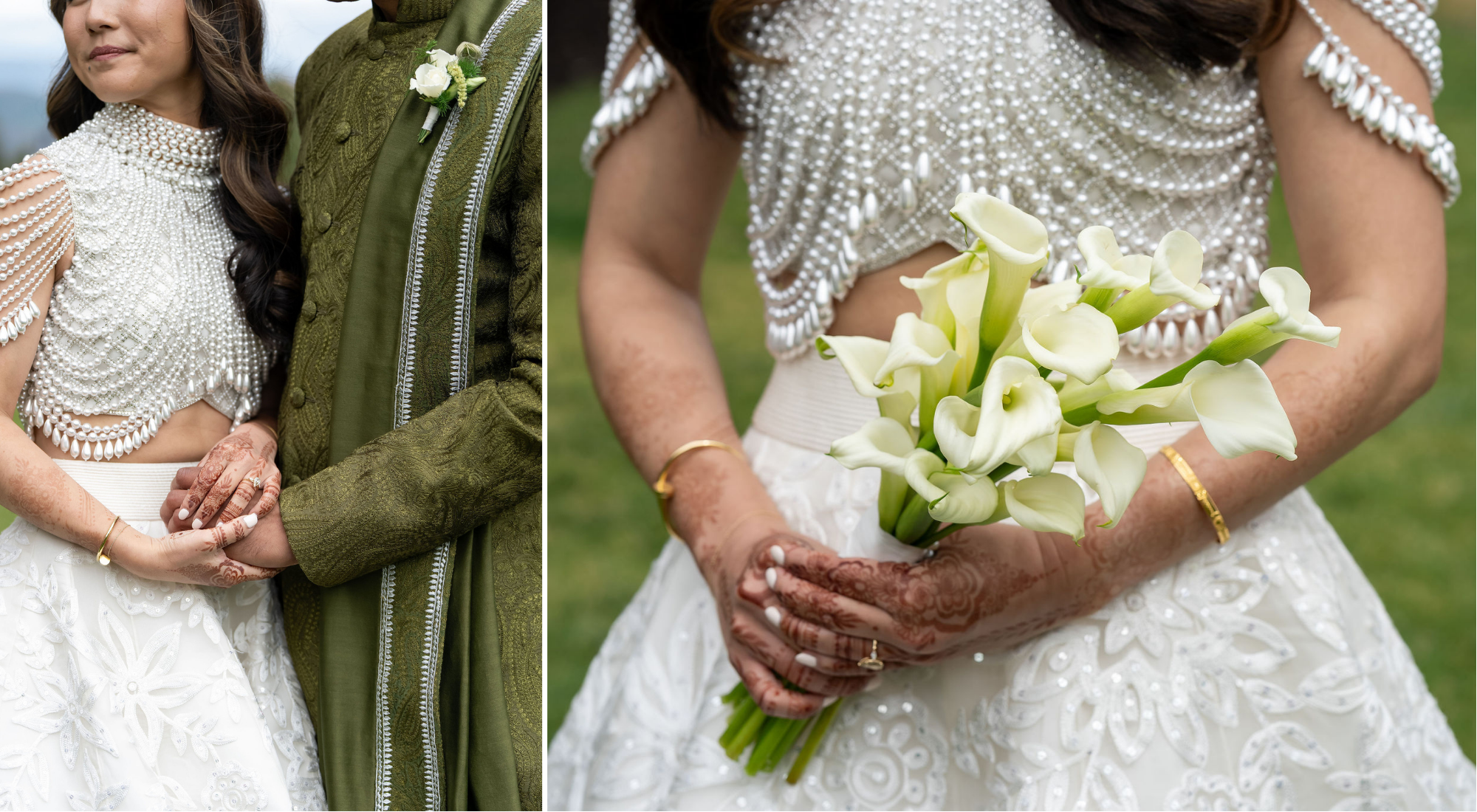
Jewelry, henna, embroidered shawls, turbans, and even coordinated family color palettes can turn the event into something spectacular. At many modern weddings, especially multicultural ones, the clothing also becomes a visual conversation between cultures. For example, at this Chinese-Indian sangeet, we saw Indian silhouettes and embroidery paired with Chinese-inspired palettes, fabrics, hair ornaments, and elegant minimalism.
Of course, as at any wedding, no one out-dresses the bride!
Food
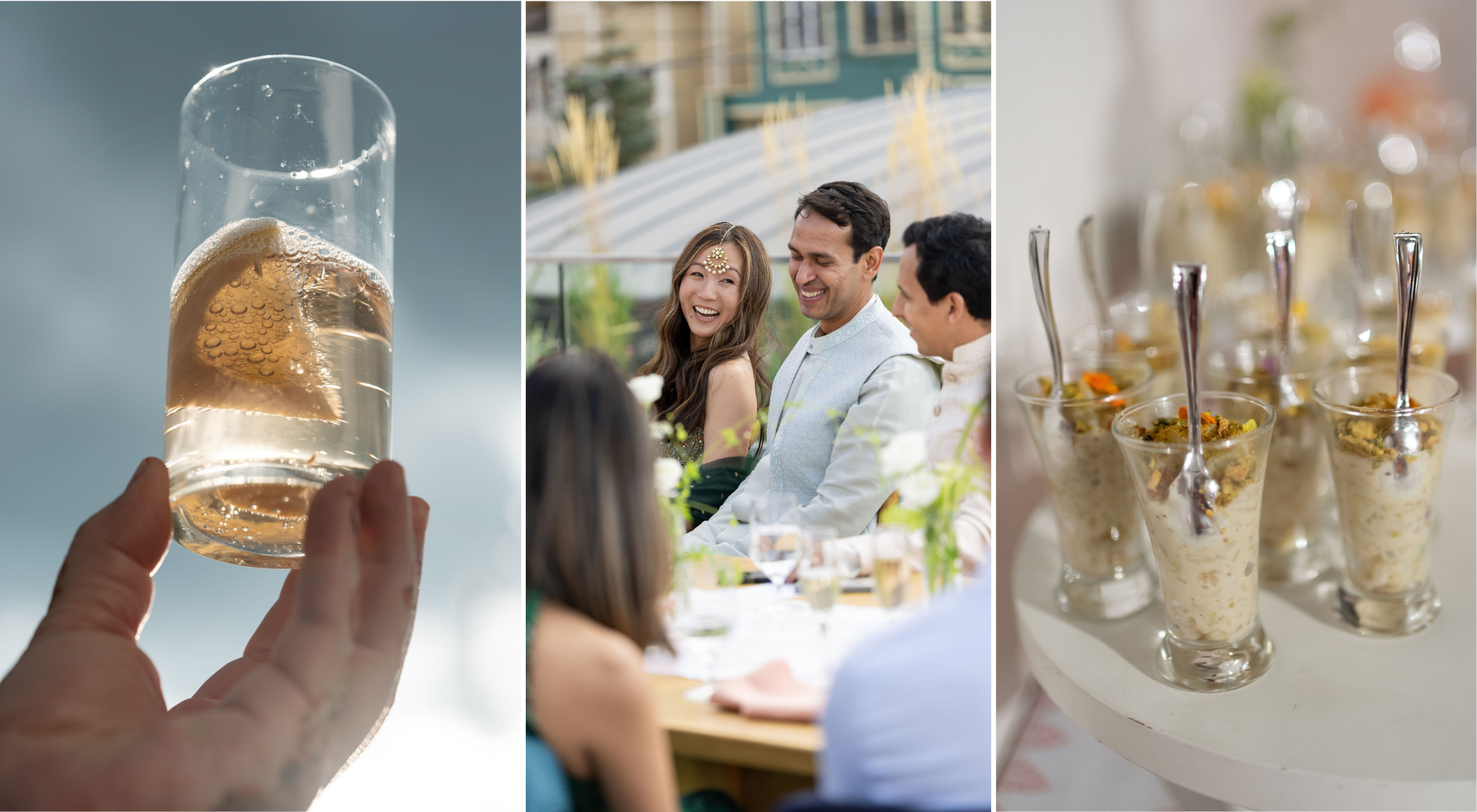
The menu (provided by Utah’s elite catering company, Culinary Crafts) was a delectable mashup of Chinese, Indian, and American cuisine.
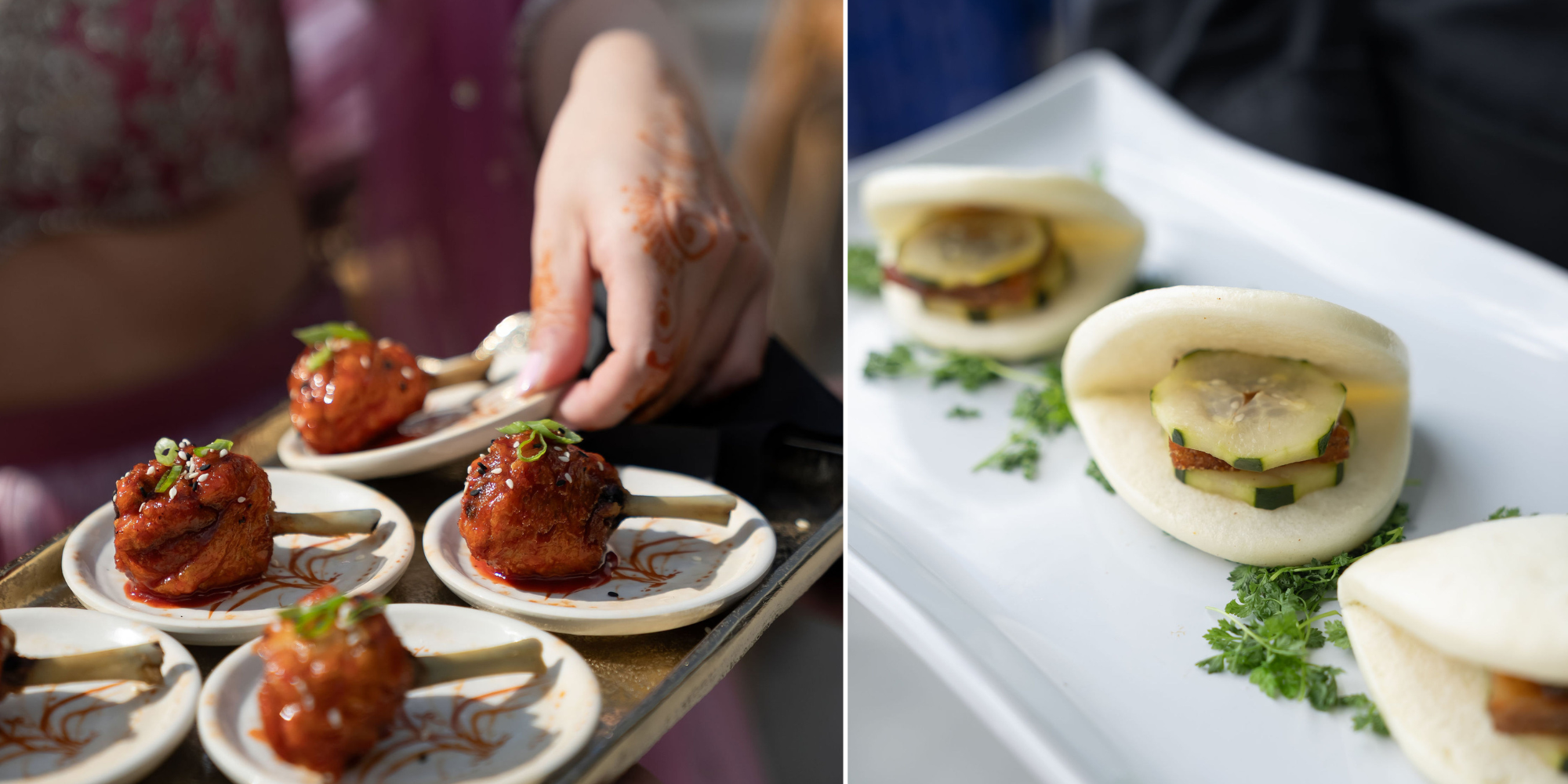
French chicken drumette with gochujang gaze
pork belly steam buns with pickled cucumber and hoisin
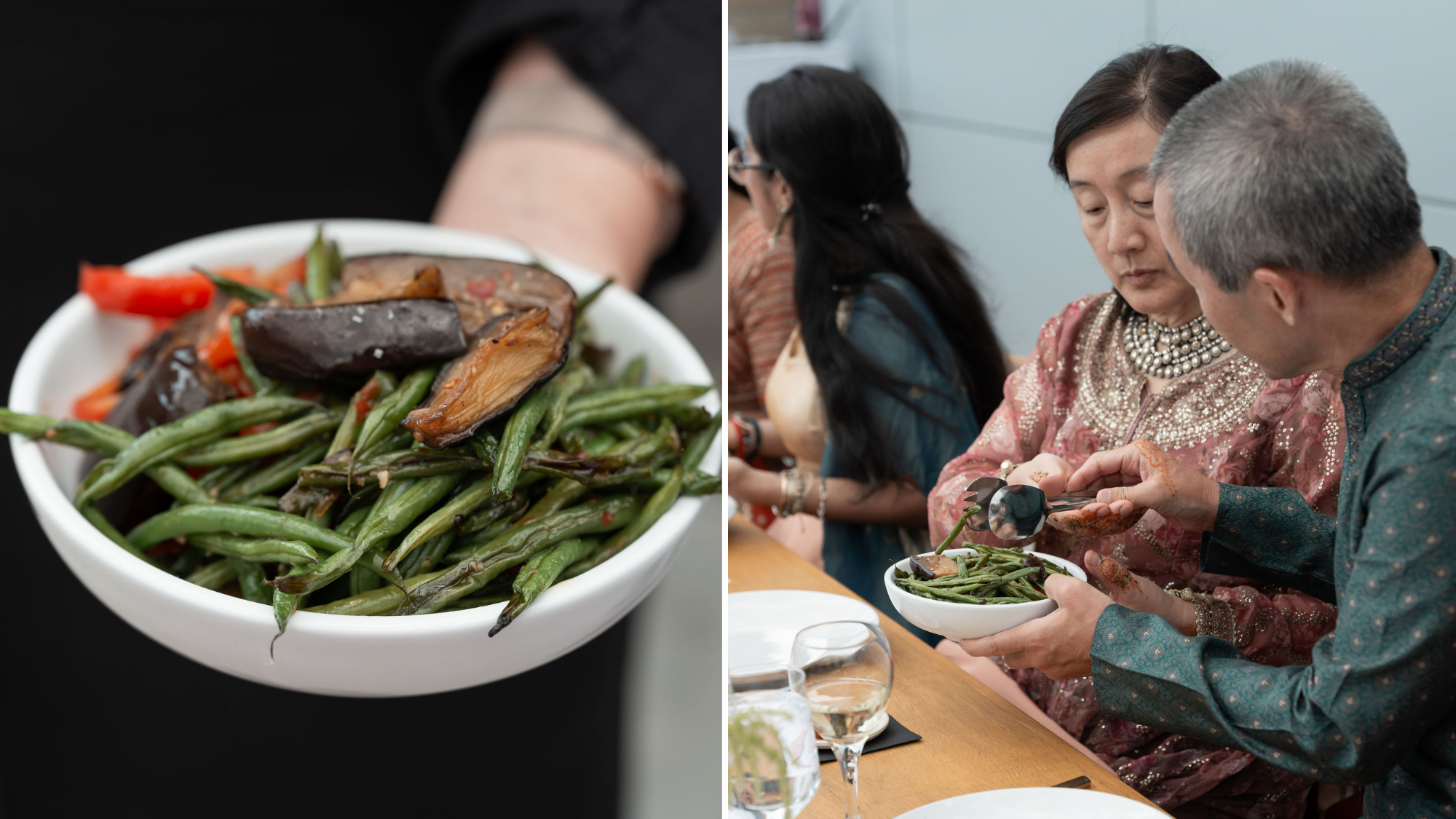
Chinese eggplant and green bean stir fry
applewood smoked Rocky Mountain red trout with tamari lime slaw
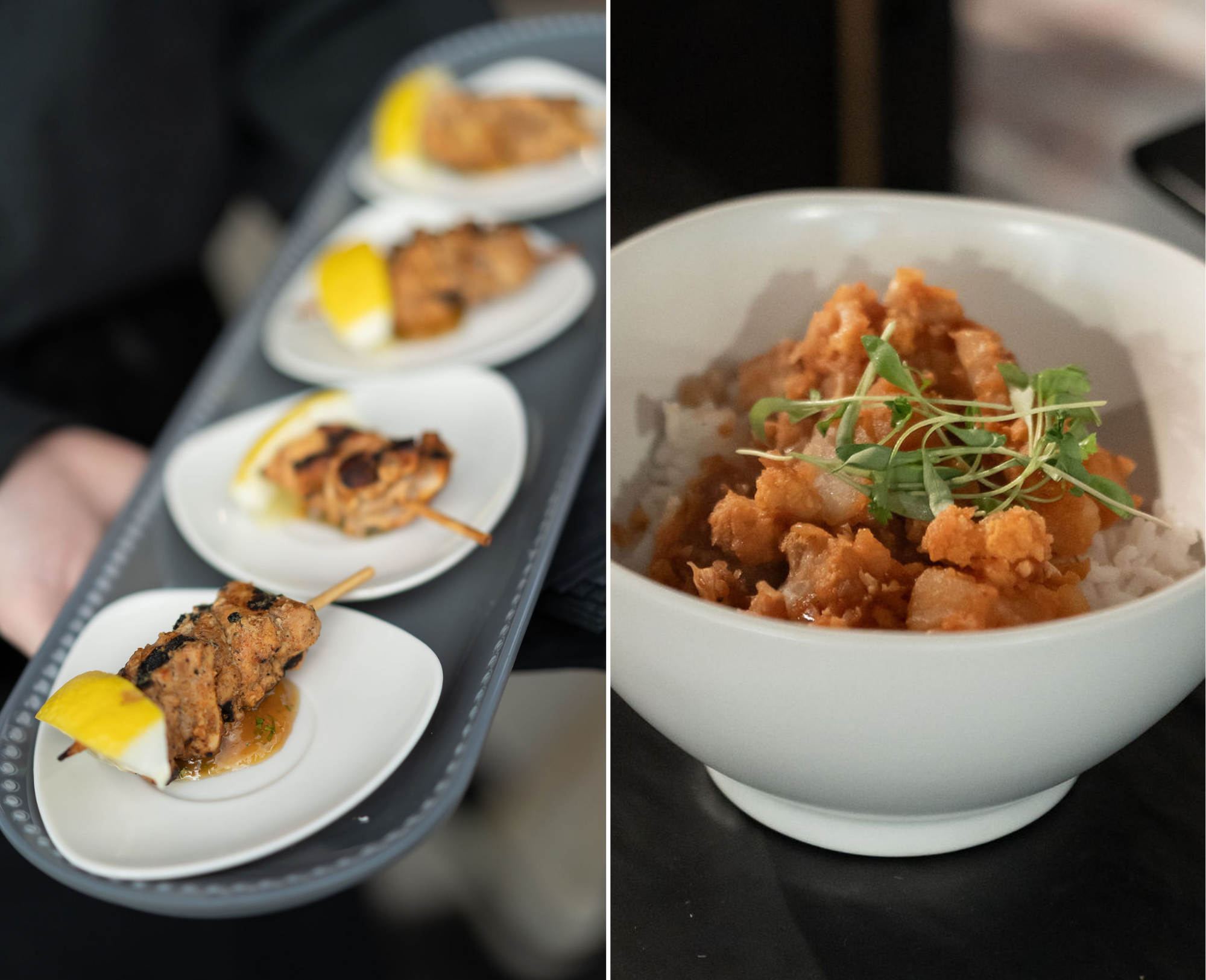
lamb kabobs and chicken kebabs with cilantro chutney and lemon wedges
aloo gobi station with cauliflower, potatoes and basmati rice
spiced potato samosas with cilantro mint pesto
chicken tikka masala station with house-made garlic naan
Kheer dessert with saffron and toasted pistachios
Dancing
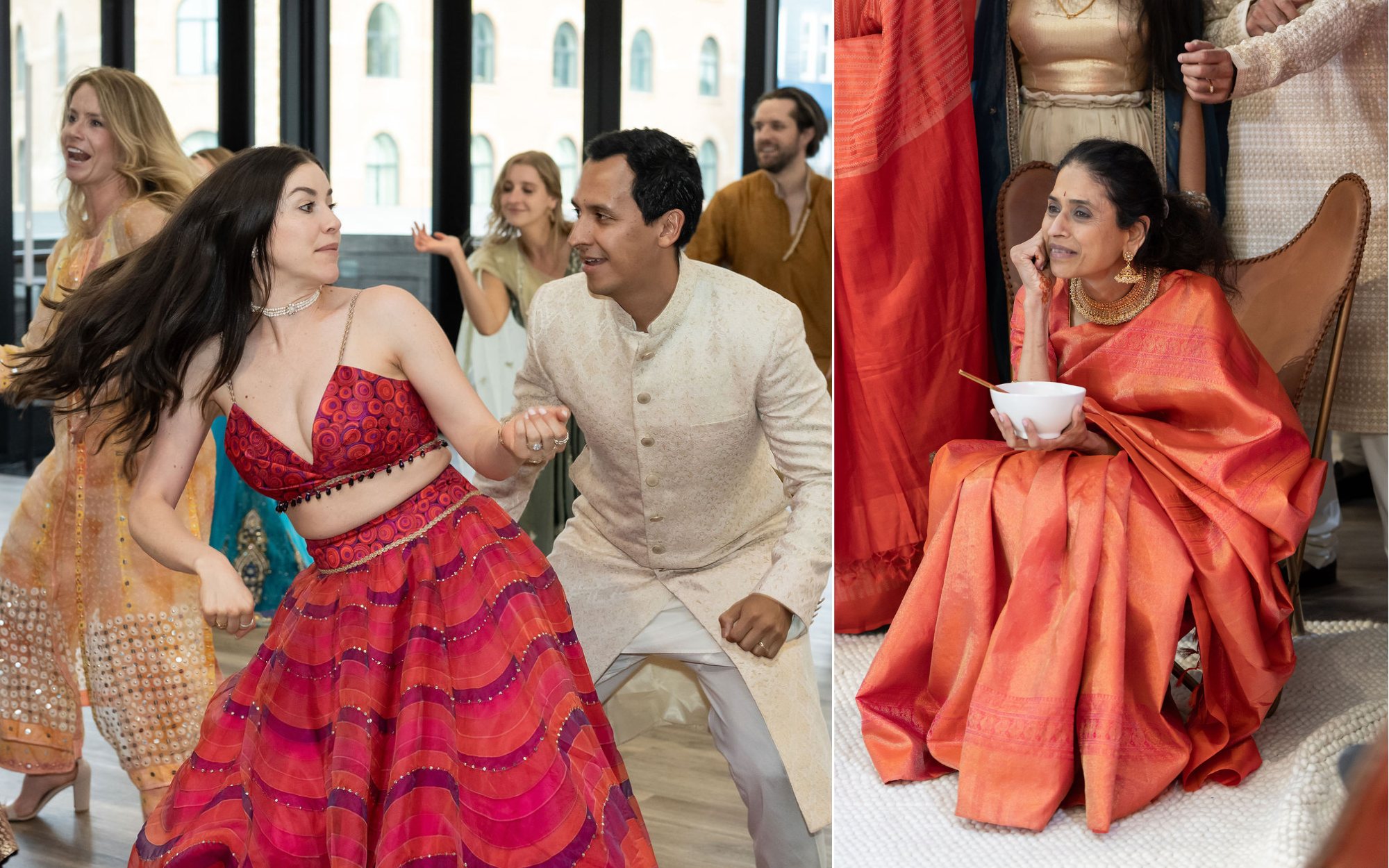
And finally, the element of the night that sangeets are best known for, the dancing. Exuberant. Electric, Effervescent, Ecstatic. Euphoric. All the E words. A little bit K-Pop and a whole lot Bollywood.
Utah Wedding Vendors
Special thanks to the amazing Utah wedding vendors who helped make this joyous event happen.
Planner: Irene & Co Events
Park City Venue: Kimball Terrace
Florist: Lilly & Iris
Photographer: Cameron Clark Photo larkphoto.com/
Videographer: Curtis Jensen Films
Sangeet & After Party DJ: DJRussPowell; Powell Weddings & Events
HMUA: bbrwedding ; Beauty By Reese
Catering: Culinary Crafts
Bar: Top Shelf
Sangeet Linens: BBJ La Tavola
Sangeet Henna: Henna by Sanz
Day of Paper Goods: Confettiology
Save the Dates: Polite Paper
Invitations: Minted Weddings